-
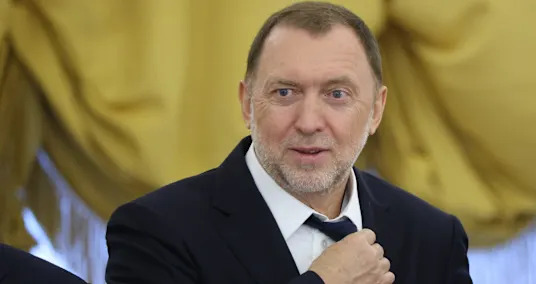
Russian tycoon Oleg Deripaska is calling for 12-hour, six-day workweeks.
-
The aluminum billionaire says longer work could help Russia speed through economic upheaval.
-
He says Russia's edge is its ability to rally and work harder in a crisis.
Russians should consider working 12-hour days, six days a week, as the country grapples with a deeper economic shift, Russian billionaire Oleg Deripaska said on Monday.
Referring to what he described as a changed global reality, Deripaska framed the country's slowing economy as more than a typical downturn driven by interest rates or monetary policy.
"This crisis is deeper. It is caused by a difficult transformation: from the global opportunities we once had to regional ones, with all sorts of restrictions," Deripaska wrote in a Telegram post.
He argued that Russia should tap into what he described as its only real resource — a "national characteristic."
"In difficult moments, we know how to pull ourselves together and work more," wrote Deripaska, the founder of Rusal, a major aluminum producer.
Longer working hours, he suggested, could help the economy adjust more quickly to changing global conditions.
"The sooner we switch to this new schedule — from 8 a.m. to 8 p.m., including Saturdays — the faster we will complete this transformation," the industrial magnate wrote.
His comments come as Russia's economy navigates a shifting landscape shaped by geopolitical tensions and changing trade flows.
Russia, a major energy exporter, has been benefiting from a surge in prices, with crude markets jolted by escalating tensions in the Middle East and disruptions to key supply routes.
Oil and gas revenues have historically accounted for more than a third of Russia's federal budget, which has been under pressure from sweeping sanctions in recent years. Official estimates showed Russia's economy grew 1% in 2025 — down sharply from 4.3% growth in 2024.
Disruptions to tanker traffic through the Strait of Hormuz — a critical global oil chokepoint — alongside a limited US sanctions waiver on some Russian shipments, have reshaped trade flows as countries scramble for supplies.
However, Deripaska had warned earlier this month that the conflict in the Middle East could weigh on global — and Russian — growth despite higher oil prices.
Benchmark crude oil futures are over 70% higher this year and trading above $100 per barrel.
Read the original article on Business Insider
LATEST POSTS
- 1
 Grammy nominations 2026: Full list of nominees in every major category, including Album of the Year and Best New Artist
 - 2Fetterman says he's back home after a fall put the Pennsylvania senator in the hospital
- 3Congo declares its latest Ebola outbreak over, after 43 deaths
- 4Top 20 Compelling Business Books for Progress
- 5Ancient eggshells shed new light on crocodiles that hunted prey from trees


- Scientists train to dive beneath polar ice as climate change warms the Arctic and Antarctica
- Savvy Cleaning: The 6 Robot Vacuums of 2024
- RFK Jr.'s vaccine panel delays hepatitis B shot vote after chaotic meeting
- One perk to marrying Richard Marx later in life? 'We don't have time' for stupid arguments, says Daisy Fuentes.
- 8 Fundamental Stages: Novice's Manual for Secure Your Android with a VPN
- Don't miss the waxing moon swing by the Beehive star cluster March 27
- Germany sees third consecutive diesel price record after rule change
- Figure out How to Get a good deal on Your Rooftop Substitution Venture
- South African army arrive in crime hotspots to help tackle gangs