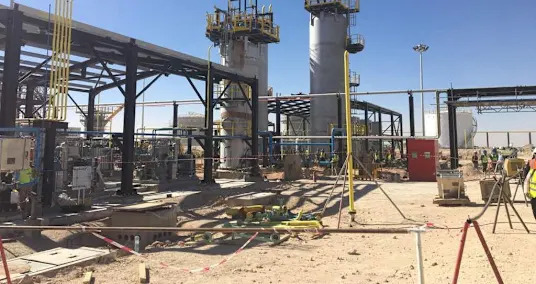
Africa’s energy producers are emerging as unexpected long-term beneficiaries of the Middle East conflict, according to oil analysts.
Angola, Mozambique, and Nigeria are among nations increasingly viewed by European and Asian buyers as lower-risk alternatives to disrupted supplies: With the Strait of Hormuz and Red Sea now high-risk routes, African volumes carry lower insurance premiums and more predictable delivery times — structural advantages that could reshape long-term supply contracts.
Africa’s liquefied natural gas sector stands to gain most; export capacity is projected to more than double by 2040, according to the African Energy Chamber. The crisis could also accelerate long-delayed projects, including the Trans-Saharan pipeline designed to carry Nigerian gas through Niger and Algeria to Europe, which has been beset by safety and security concerns in the Sahel region.
Horizon Engage risk analyst Clementine Wallop warned, however, that while Africa was a “logical place to look,” the risks some of these projects have faced — security, political, or logistical in nature — “show that this is not a quick fix.”
Potential gains for producer nations are nevertheless cold comfort for millions of ordinary Africans: The conflict has sent Brent crude surging more than 50% to around $110 a barrel, and since most African countries are net importers of refined oil products, the price shock has been swift and severe.

LATEST POSTS
- 1
 We tasted one of the 10,000 Hershey's Dubai chocolate bars being resold on eBay. Is it worth the hype?
 - 2I tried a macho, creatine-loaded cereal “for men.” Did I mention I'm a woman?
- 3Pick Your Top Method for starting the Morning
- 45 Family SUVs for 2024: Which One Accommodates Your Family's Needs\uff1f
- 5Evaluated Smartwatches for Wellness Devotees


- Gym tied to outbreak of obscure disease that spreads through mist
- Ancient eggshells shed new light on crocodiles that hunted prey from trees
- 5 Home EV Chargers for Proficient and Solid Charging
- Extraordinary Snowboarding Objections All over the Planet
- Netflix is releasing a documentary on Elizabeth Smart. What to know about her kidnapping, rescue and where she is now.
- Practice environmental safety in Style: Divulging Famous Electric Vehicle Brands
- Interstellar comet 3I/ATLAS to pass closest to Earth on Friday
- The most effective method to Move toward Compensation Conversations for Cutting edge Practice Enrolled Attendants
- 'I was diagnosed with incurable brain cancer on holiday'